Book Title
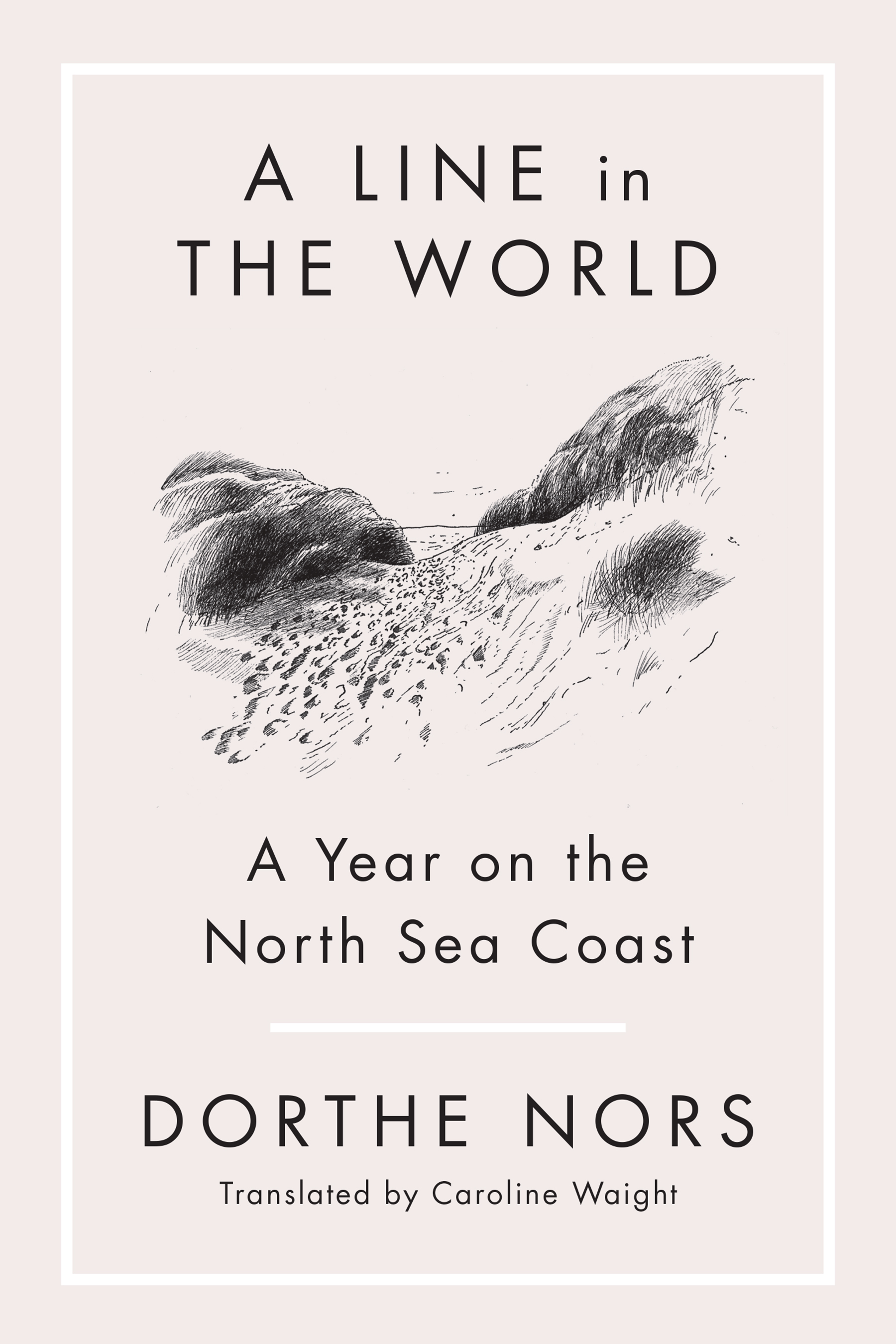
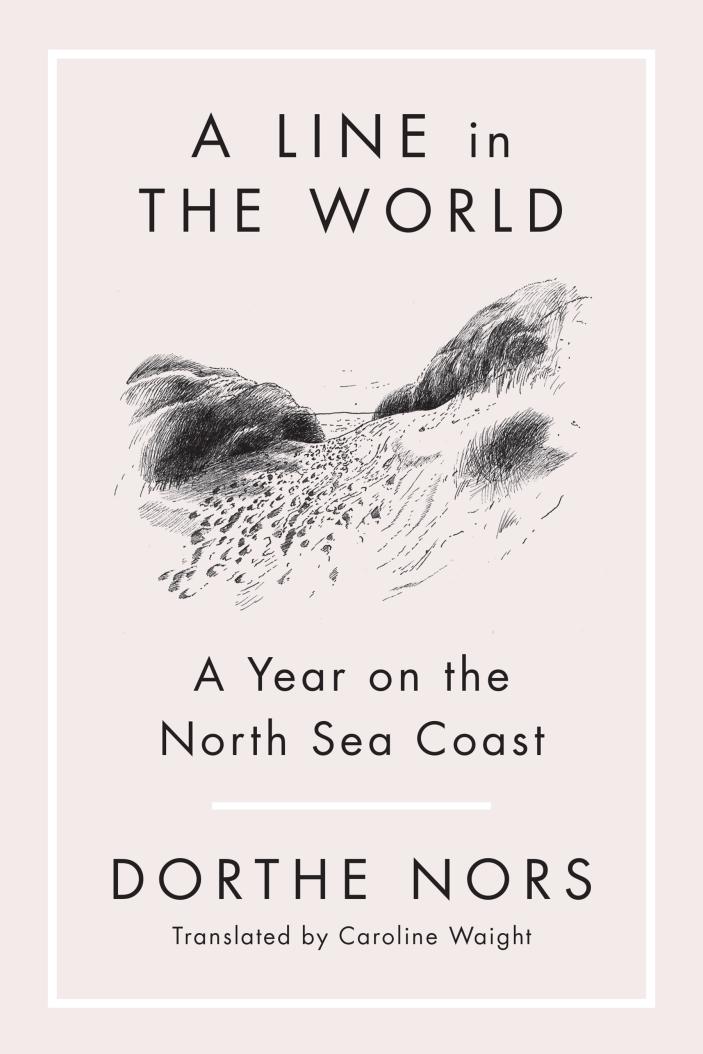
A Line in the World
Subtitle
A Year on the North Sea Coast
- Finalist for the 2022 National Book Critics Circle Award for Autobiography
Shortlisted for the 2023 PEN Translation Prize
Body
Me, my notebook and my love of the wild and desolate. I wanted to do the opposite of what was expected of me. It’s a recurring pattern in my life. An instinct.
Dorthe Nors’s first nonfiction book chronicles a year she spent traveling along the North Sea coast—from Skagen at the northern tip of Denmark to the Frisian Islands in the Wadden Sea. In fourteen expansive essays, Nors traces the history, geography, and culture of the places she visits while reflecting on her childhood and her family and ancestors’ ties to the region as well as her decision to move there from Copenhagen. She writes about the ritual burning of witch effigies on Midsummer’s Eve; the environmental activist who opposed a chemical factory in the 1950s; the quiet fishing villages that surfers transformed into an area known as Cold Hawaii starting in the 1970s. She connects wind turbines to Viking ships, thirteenth-century church frescoes to her mother’s unrealized dreams. She describes strong waves, sand drifts, storm surges, shipwrecks, and other instances of nature asserting its power over human attempts to ignore or control it.
Through a deep, personal engagement with this singular landscape, A Line in the World accesses the universal. Its ultimate subjects are civilization, belonging, and change: changes within one person’s life, changes occurring in various communities today, and change as the only constant of life on Earth.

Dorthe Nors’s first nonfiction book chronicles a year she spent traveling along the North Sea coast—from Skagen at the northern tip of Denmark to the Frisian Islands in the Wadden Sea. In fourteen expansive essays, Nors traces the history, geography, and culture of the places she visits while reflecting on her childhood and her family and ancestors’ ties to the region as well as her decision to move there from Copenhagen. She writes about the ritual burning of witch effigies on Midsummer’s Eve; the environmental activist who opposed a chemical factory in the 1950s; the quiet fishing villages that surfers transformed into an area known as Cold Hawaii starting in the 1970s. She connects wind turbines to Viking ships, thirteenth-century church frescoes to her mother’s unrealized dreams. She describes strong waves, sand drifts, storm surges, shipwrecks, and other instances of nature asserting its power over human attempts to ignore or control it.
Through a deep, personal engagement with this singular landscape, A Line in the World accesses the universal. Its ultimate subjects are civilization, belonging, and change: changes within one person’s life, changes occurring in various communities today, and change as the only constant of life on Earth.
List Price
$18.00
Purchase at
Purchase at:
Keynote
A celebrated Danish writer explores the unsung histories and geographies of her beloved slice of the world
Praise
- “[A] luminous set of reflections. . . . An intricate reckoning with a world that, despite our best attempts to tame it, remains elemental and wild.”—Kirkus Reviews, starred review
- “A Line in the World is . . . one of the first books to capture the unique region in English. In prose that is as sparse and quiet as the marshy Jutland peninsula itself, the book provides a snapshot of life in a location that is full of history and at the same time ever-shifting, its future uncertain.”—Courtney Tenz, The Washington Post
- “Languorous and evocative. . . . The dramas of the past are evoked not so much through individual characters as through their traces—buildings, ruins, shipwrecks . . . ancient landscapes steeped in myth. . . . Nature is at the heart of this beautiful book.”—Claire Messud, Harper's
- “Ms. Nors is ever on the hunt for the secret seams of passion—whether from terror or jubilation—beneath the stark surface of the land and behind the faces of its button-lipped inhabitants. . . . The tone here, in Caroline Waight’s translation, is gentle and considered. It has clearly been [Nors’s] intention to avoid both tourist gawking and big-city condescension, and the result is both revealing and respectful. . . . Beautiful.”—Sam Sacks, Wall Street Journal