Keynote
A Palestinian voice traces the silence living inside history and insists on the enduring beauty of the world
Join us at the 2026 Literary Salon in Minneapolis on Thursday, September 10 @ 7-9 pm
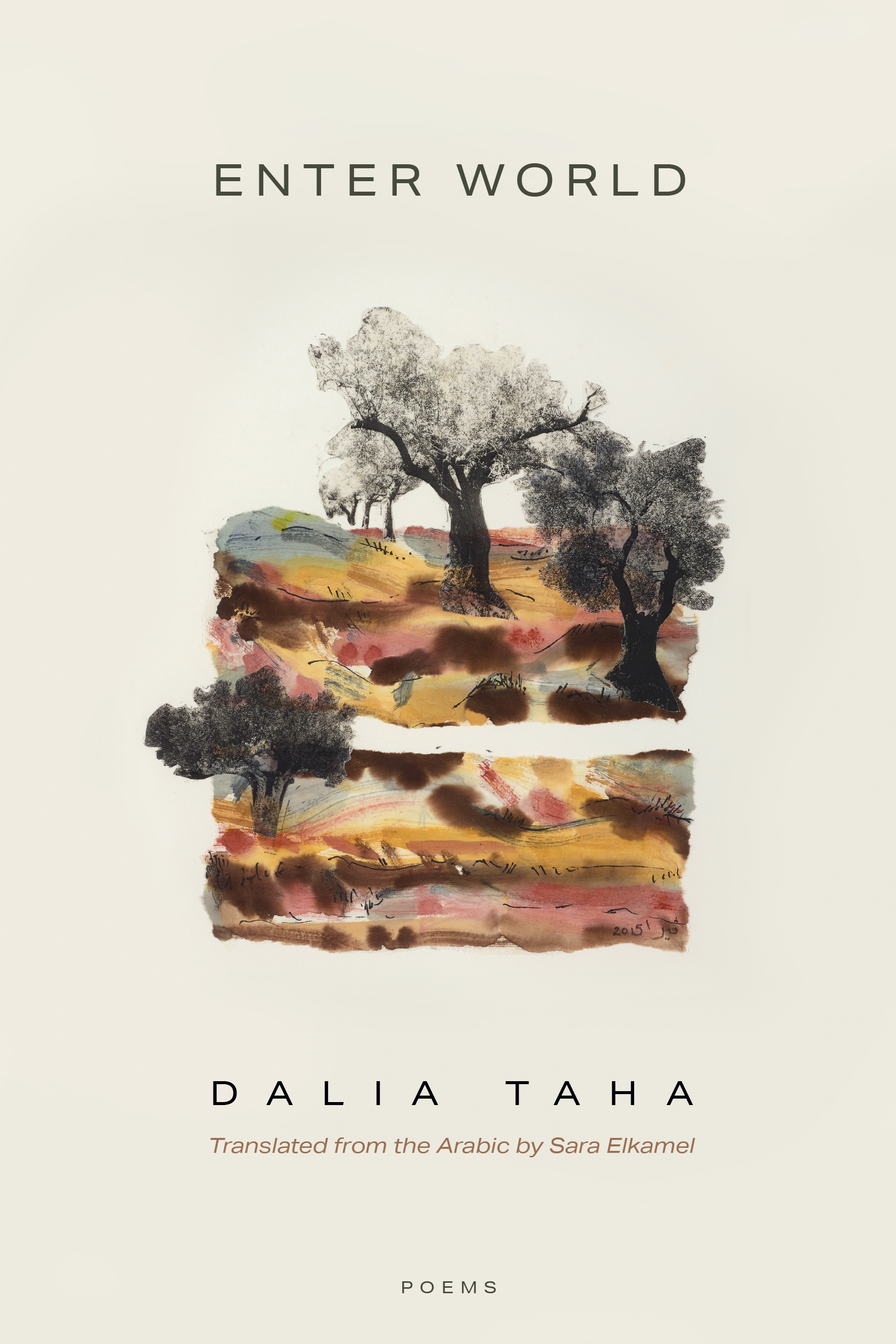
“In Taha’s lyric poems, translated by Sara Elkamel, there’s no lazy syllable, no wasted gesture; everything has the feel of elemental, irreducible truth. . . . Enter World gives us pulverizing simultaneity, rendered heart-forward with extraordinary virtuosity. Taha is a major, major poet.”—Kaveh Akbar
If you want to see mankind’s cruelest face for yourself, come to our land. If you want to witness the darkest fraction of night, visit the olive trees, and gaze between their arms—it will feel like spying on night in its bedroom. The tree does not fear night’s bleak soul, just as night does not fear the barbed branches. Right there, every Palestinian owns their share of oil and darkness. Their share of gold and red.
—From “Enter Olive Trees”
Writing from Ramallah, Dalia Taha captures her proximity to the Gaza genocide—the losses unspeakable and the destruction near total. In Enter World, poetry emerges as an answer to the violences of war, as a means to encounter and foster resilience. Taha’s lines bear witness to the atrocities in Palestine, but also reflect lyrically on beauty, justice, and humanity.
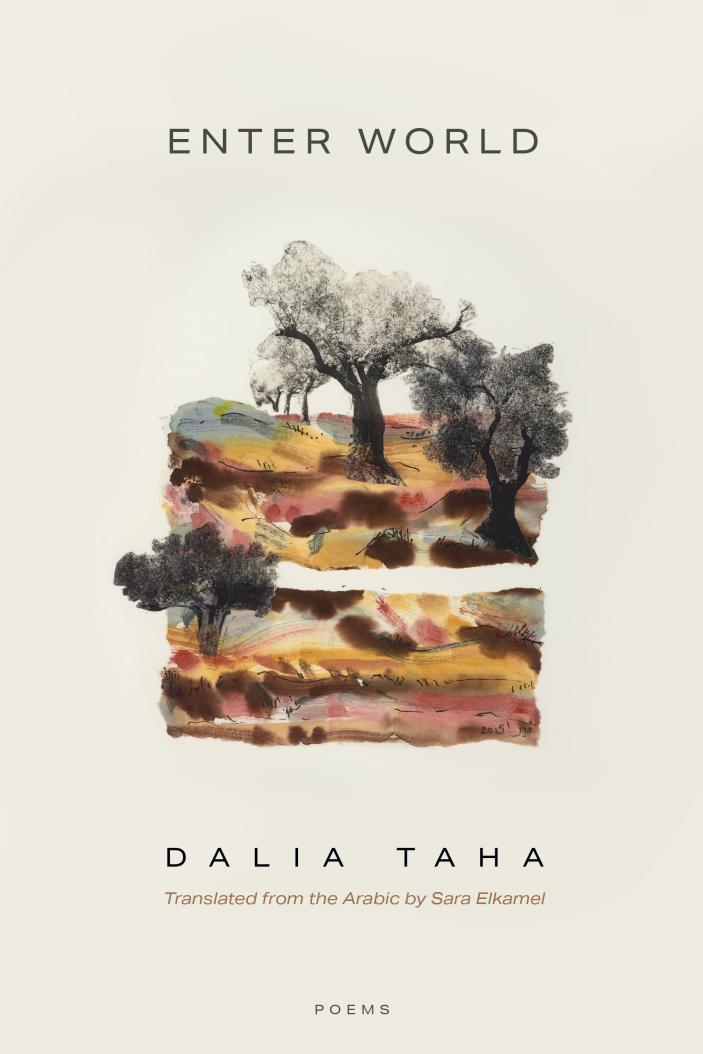
In Sara Elkamel’s spare and emotionally direct translation, each poem’s title begins with “enter,” an invitation to fill an empty stage, for a landscape to form. The poet’s world materializes: olive trees, hills, inscribed walls in prison cells. These images accrue into an intimate and mythic declaration of resistance through art, of beauty found amid terror. A world is captured, made permanent on the page, even as it is obliterated.
A Palestinian voice traces the silence living inside history and insists on the enduring beauty of the world

“Each ‘Enter’ in Dalia Taha’s breathtaking Enter World shoulders a deeply human and humanizing world and return it to us reimagined, luminous, and bravely alive. Sara Elkamel’s translation carries every shade of tone and rhythm and every tremor, edge, and radiance of Taha’s work.”—Khaled Mattawa